


My menstruation is not a luxury, yet for millions of women and girls, it represents a monthly financial, physical, and emotional burden. Period poverty is not just a loss of dignity, but a real health risk – and yes, it is present in Hungary too. It is time to speak out: menstruation is not a privilege, but a fundamental right.
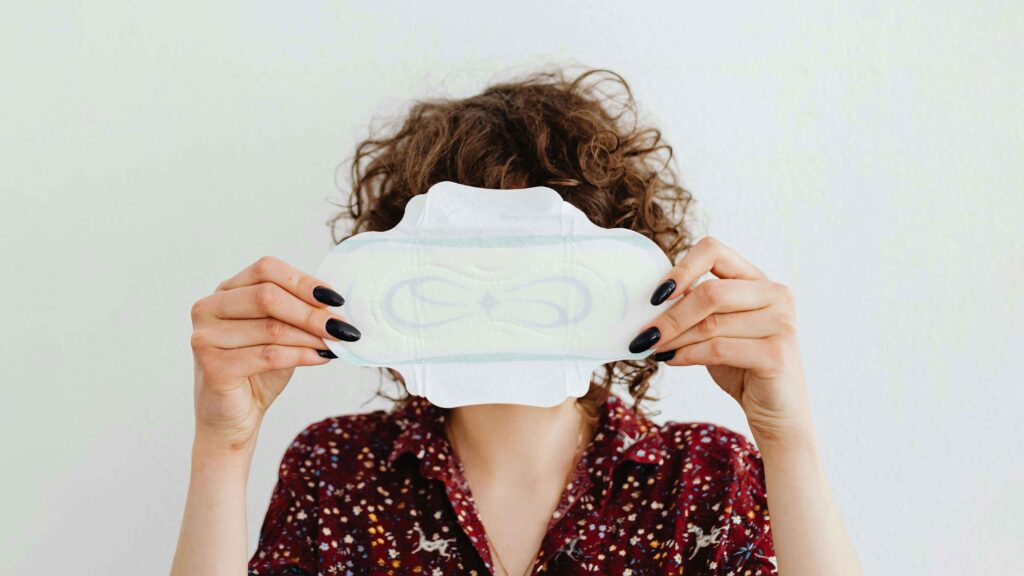
Imagine that every month, something essential is missing from your life – not your favorite lip gloss, not the latest trendy jeans, but something much more important: clean water, a safe, lockable restroom, clean underwear, and those simple yet indispensable products that help you experience your period with dignity.
Imagine that when those few days of the month arrive, you cannot go to school because you don't have a pad. You use rags, toilet paper, or paper tissues instead, because you cannot afford what others take for granted. This is period poverty – a reality few talk about, even though millions of women and girls experience it day after day worldwide. And not just in developing countries: in Hungary too. According to some estimates, period poverty may affect up to thirty percent of Hungarian women.
Throughout history, women have always found some solution for managing menstruation – archaeologists suggest that in ancient Egypt, they used softened papyrus; in Greece, wool; in Scandinavian countries, dried moss; while in other places, they made reusable cloths from linen or rags. There was always something to absorb the blood, something to help life go on. Today, we live in a completely different world: it is enough to walk into the nearest drugstore or supermarket, where rows of shelves offer various pads, tampons, period panties, and cups – mostly products made of cotton, rayon, and silicone, which for most of us are a matter-of-course part of our monthly routine.
What is in the background?
Behind period poverty lies much more than just financial hardship. Many might think this is only a problem for those living in extreme poverty, but that is not the case. Behind it stands a taboo carried for thousands of years, the sense of shame, and societal expectations.
Because menstruation is still a taboo today – something we speak about in whispers, if we speak about it at all. Feminism or not, it seems there are still things we do not stand up for – or for each other. And this silence keeps not only ignorance alive but also exclusion.
In Hungary, one of the most serious economic facets of the problem is that sanitary products are subject to a 27 percent VAT – one of the highest rates in all of Europe. While in most countries this tax is only a few percent, in many places it ranges between 5–10%, and some have even abolished it entirely, our system still treats basic hygiene products as luxury items. Several countries – including the United Kingdom and New Zealand – have already recognized that menstruation cannot be a matter of privilege, and they provide the necessary products to students and those in need free of charge.
In Hungary, however, these remain among the most heavily taxed products – as if we had to pay for our biological reality. The consequences are daily, yet often invisible. Among schoolgirls, one in ten has already missed school days because they did not have a proper pad or tampon. Some stay home, while others spend the whole day trying to hide the situation, anxious about the inconvenience. And period poverty is not just a problem for the poorest: it appears in workplaces, universities, and the lives of young women. Because at the end of the month, one sometimes has to choose: food, electricity bill, or pads.
The hidden dangers of improper tools
Period poverty does not only involve a loss of dignity, but also poses serious physical risks. Many who cannot afford to buy menstrual products are forced to improvise: they use socks, rags, paper tissues, or even crumpled-up tissues instead of a tampon. However, these materials are not hygienic and can be sources of serious infections. As a gynecologist, we often encounter patients – including homeless women – who, in their desperation, use tools not designed for this purpose. It happens that these foreign materials remain in the vagina for days, which can lead to severe inflammation or even pelvic infections. But it is not only improper tools that pose a threat. Overusing a tampon – that is, leaving it in for more than eight hours – can trigger a rare but life-threatening condition called toxic shock syndrome (TSS). This develops due to toxins produced by bacteria and can cause severe symptoms in a short time: nausea, diarrhea, fever, rash, drop in blood pressure, and even kidney and liver dysfunction. Therefore, menstrual products are not just a convenience issue but a health one as well. Access to proper hygiene conditions can be literally vital.
What can be done?
Period poverty is not an intangible social problem – it is very real, and for that very reason, it is solvable. It only requires will, attention, and collaboration. Change can start on several levels: decision-makers, institutions, NGOs, and we women – we are all key players in it. At the state level, the most important step would be for menstrual products not to be considered luxury items. Reducing or abolishing VAT would not just be a gesture, but genuine help for those for whom every forint counts. It is equally essential that basic hygiene products be available in schools and public institutions – just like soap or toilet paper in restrooms. Civil society organizations are already doing a lot: trying to tear down the wall of shame through donation drives, educational campaigns, and awareness programs. But real change in perspective happens when we can speak about menstruation openly and naturally – at home, at school, in the workplace, and between each other.
And finally, there is individual responsibility.
Because change often does not begin with laws, but with a single sentence: when we do not look away, but say out loud that this is also part of our reality. Let's support each other, talk about it, and pay attention to those who have no voice – because if we join forces, we are capable of much more than we think.


